
Game Designer Salary: 2026 Pay and Career Guide

Updated: August 14, 2026
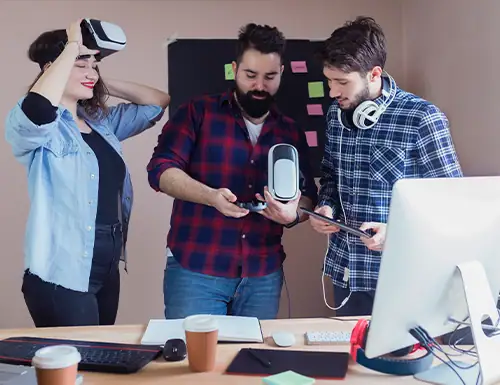
Game designer salary figures vary widely by source, and there’s a reason for that. The US Bureau of Labor Statistics doesn’t track “game designer” as its own occupation. Studios split the work across animators, software developers, artists, and producers, so the number you get depends entirely on which job title someone decided to count.
That’s why one site tells you $60,000, and another tells you $130,000. Neither is lying. They’re measuring different things.
What you can do is look at the federal occupations game designers actually get counted under, then work out where you’d realistically sit. Pay in this field tracks experience, location, studio type, and portfolio strength far more closely than it tracks job titles.
This guide walks through the real numbers, the factors you can influence, and what a beginner path looks like. Our online Game Design Certificate is one way to start building the portfolio piece from wherever you live.
Key Takeaways
- Game designer salary varies by experience, location, employer type, and job title.
- BLS has no standalone game designer occupation, which is why salary databases disagree.
- Entry-level designers usually earn well below all-level averages.
- A portfolio shows employers you can turn design ideas into playable systems.
- Game design and game development are different jobs with different pay patterns.
- Online learning lets you build foundation skills without relocating.
- No certificate or degree can promise a specific salary.

How Much Does a Game Designer Make in 2026?
Game designers earn different salaries depending on experience, location, employer, and the exact job title they hold. The most reliable public wage data comes from the US Bureau of Labor Statistics, so here’s what the closest occupations pay.
| BLS Occupation | Median Annual Wage | Lowest 10% | Highest 10% | Growth 2024 to 2034 |
| Special effects artists and animators | $99,800 | Under $57,220 | Over $174,630 | 2% |
| Software developers | $133,080 | Under $79,850 | Over $211,450 | 15% |
| Software QA analysts and testers | $102,610 | Under $60,690 | Over $166,960 | 15% |
| Web and digital interface designers | $98,090 | Not published | Not published | 7% |
Those are May 2024 medians, the most recent full set in the Occupational Outlook Handbook. The May 2025 wage survey moved special effects artists and animators up to roughly $102,000, so the direction of travel is mild upward drift rather than anything dramatic.
Two things stand out. The spread inside a single occupation is enormous, with animators running from under $57,000 to over $174,000. And projected growth for creative roles is much slower than for software roles.
Treat all of this as a planning range, not a forecast of your first offer. If you’re outside the US, these figures won’t map to your market at all.
What Affects Game Designer Salary?
Experience, location, employer type, portfolio quality, and technical skills all move game designer pay. Some of those you can influence.
Experience and Seniority
This is the single biggest factor. Junior, mid, senior, and lead designer roles can differ by two or three times, and studios promote on shipped work rather than years served.
Location and Remote Hiring
Studio clusters pay more and cost more to live in. Remote roles have widened access, but competition for them is fierce, and pay is often benchmarked to where the studio sits, not where you do.
Studio Size and Project Type
Large studios pay more predictably. Small and indie studios pay less on average but often hand you far more responsibility, which accelerates the experience factor above.
Portfolio and Technical Skills
Designers who can prototype their own ideas negotiate from a stronger position than designers who can only describe them. Familiarity with a game engine, basic scripting, and clear design documentation all show up in offers.
What Is an Entry-Level Game Designer Salary?
Entry-level game designers usually earn less than published averages because they’re still building proof of skill. Junior and associate roles sit closer to the bottom quartile of the ranges in the table above, and internships pay less again.
Contract work complicates the picture. Studios hire heavily on contract around production peaks, and contract rates can look higher per hour while offering no benefits and no guaranteed renewal. Indie and self-published work is unpredictable by nature.
The realistic framing is this: your first role is about getting shipped work on your record. Pay usually improves fastest between year one and year four, once you have something concrete to point at.
Do Game Designers Get Paid More Than Developers or Artists?
Game designer pay generally sits below programming pay and roughly alongside art and animation pay, because the roles need different skill mixes. Before comparing salaries, it helps to be clear on what each job actually does.
- A game designer plans mechanics, rules, levels, systems, and player experience.
- A game developer or programmer writes and maintains the code that makes those systems run.
- A game artist or animator creates visual assets, characters, environments, and style.
- A UX designer shapes menus, controls, onboarding, and how players learn the game.
- A producer manages schedule, scope, and communication across the team.
The BLS software developer median of $133,080 is meaningfully higher than the animator median of $99,800, and that gap holds up inside games too. Studios also tend to pay somewhat less than enterprise software firms for equivalent technical work, a pattern worth understanding before you commit, and one that game development as a career choice covers in more depth.
Hybrid roles, particularly technical designers who can both design and script, often clear both benchmarks.

Do You Need a Degree to Become a Game Designer?
Some game design jobs require a degree, and others weight portfolio, software skills, and shipped work more heavily. BLS lists a bachelor’s degree as the typical entry-level education for animators, which tells you where the market baseline sits, but studios hire from mixed backgrounds.
What consistently matters is evidence. You need work someone can play, plus the ability to explain why you made the choices you made.
Structured study helps with the hard parts to teach yourself: design vocabulary, critique, iteration under deadline, and finishing things. Our online Game Design Certificate is an 18-credit, six-course program covering games and society, narrative and storytelling, prototyping, and hands-on development in the Godot engine, ending in a capstone where you build and present a complete game. Those credits also count toward a full bachelor’s degree if you continue.
Computer science coursework is the other useful lever, since scripting and systems thinking make you far more employable. Our online computer science degree and associate degree in computer science both cover programming foundations, and the free IBM SkillsBuild certificates are worth stacking alongside.
How Can You Raise Your Earning Potential in Game Design?
You improve your earning potential by building a focused portfolio and learning how design choices change player behavior. Work through this list:
- Build three small playable projects rather than one unfinished ambitious one.
- Document your design decisions, not just your final screens.
- Learn one game engine properly instead of sampling four.
- Pick up enough scripting to prototype your own ideas.
- Run playtests and show what you changed based on feedback.
- Practice explaining a design choice in two minutes, out loud.
- Contribute to a game jam or collaborative project to prove you can work on a team.
Communication is undervalued here. Design is a persuasion job as much as a creative one, and the designers who advance are usually the ones who can defend a decision without getting defensive. There’s more on the education side in our breakdown of whether online game design degrees are worth it.
Is Game Design a Good Career for International Online Learners?
Game design can suit online learners who want creative and technical work, though salary and hiring vary sharply by country. Almost all published salary data is US-focused and won’t reflect your local market.
Remote hiring does exist, and portfolios travel across borders in a way that transcripts don’t. A playable build hosted online is legible to a studio anywhere. That’s a genuine advantage for international students, and earning a US degree online generally doesn’t require a student visa when there’s no campus attendance.
The honest caveat is competition. Remote design roles attract global applicant pools, so your portfolio has to do more work than it would locally. Our asynchronous online learning model lets you study across time zones while you build one.
What Beginner Path Leads Toward Game Design Roles?
You can move toward game design roles by learning fundamentals, building projects, gathering feedback, and applying with a focused portfolio. Here’s roughly how that sequences.
- Months one to three. Learn core vocabulary and mechanics. Pick one engine. Build something tiny and finish it.
- Months four to six. Build two more small projects, each proving one specific skill: level design in one, a systems loop in another. Write short design notes for each.
- Months seven to nine. Get real players in front of your work. Revise based on what they do rather than what they say. Join a game jam.
- Months ten to twelve. Assemble a portfolio that presents each project as a problem, a design choice, and a result. Start applying to junior roles, QA positions, and internships.
Your timeline will differ, especially if you’re studying around a job. The sequence matters more than the calendar.

How Should You Decide Whether Game Design Is Worth Studying?
Compare your salary expectations against the learning effort, portfolio requirements, and job demand where you live or plan to work.
Three practical checks before you commit. Search current job postings for junior game design roles and read what they actually ask for. Be honest about whether you enjoy iterating on other people’s feedback, because that’s most of the job. And look at total cost against realistic entry-level pay in your market, not US medians.
If structured, low-cost study fits, our Game Design Certificate costs a $60 application fee plus a $320 assessment fee per course, with no tuition. You can check the full picture on our fees page or model it with the cost calculator, and scholarships are available if fees are a barrier.
FAQs
Are game designers well paid?
Game designers can be well paid, but pay depends on experience, location, employer, and role level. BLS data for related occupations shows medians near $100,000, with the lowest 10 percent under $57,000. Beginners usually earn well below the average.
Is it hard to become a video game designer?
Game design is competitive to enter because many applicants want the work. You improve your odds by building playable projects, learning a game engine properly, and showing how you solve player-experience problems rather than just describing ideas you’ve had.
Do game designers need a degree?
Some employers prefer or require a degree, and BLS lists a bachelor’s as typical entry-level education for related roles. Others weight portfolio and practical skills more heavily. A certificate can teach structure and tools, but it doesn’t promise a job.
Is game design a good career?
Game design suits people who enjoy creative problem-solving, feedback, and technical teamwork. It fits less well if you want predictable pay, stable project cycles, or a field with low competition. Studio layoffs and project-based hiring are both common.
What skills affect game designer salary?
Pay rises when you can prototype your own ideas, understand player behavior, write clear design documents, work well with developers, and show polished portfolio projects. Communication and revision skills matter because design work is collaborative by nature.