
Can an Online M.Ed. Advance Your Career? Here’s My Story

Published: August 5, 2026
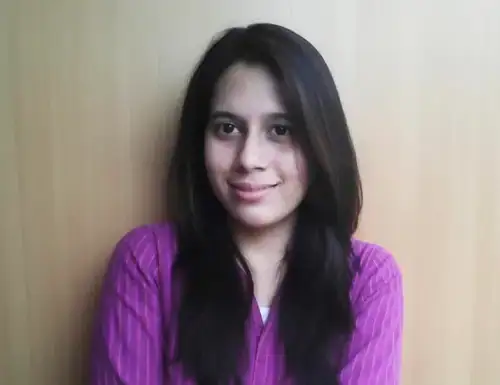
My professional journey has never followed a single path. Education, design, research, writing, and advocacy may seem like very different fields, but for me, they have always been connected by one central idea: helping people learn, grow, and access opportunities.
I am a Bangladeshi multidisciplinary professional based in Chattogram, Bangladesh. My academic journey began with A-Levels in Business Studies and Mathematics before I earned my Bachelor of Arts from Chittagong Independent University in 2021. I also completed a Level 3 Diploma in Health and Social Care.
Over time, my interests expanded beyond traditional academic boundaries. I moved into graphic and instructional design while continuing to explore education, research, writing, and advocacy. Eventually, I realized that I wanted to bring these different interests together through a deeper understanding of how people learn.
That realization led me to University of the People.
Why I Chose UoPeople for My Master of Education
I chose to pursue my Master of Education (M.Ed.) in Advanced Teaching at UoPeople because its approach to higher education aligned closely with my own values.
The university’s commitment to accessible, flexible, and tuition-free higher education particularly resonated with me. I was already balancing several professional and academic interests, so having the flexibility to continue developing my career while pursuing an advanced degree was extremely valuable.
What I appreciated most was that flexibility did not mean learning in isolation. UoPeople’s project-based approach and peer-supported environment gave me opportunities to engage with different perspectives and think more critically about how education works in practice.
I completed my M.Ed. in Advanced Teaching in October 2023, but what I learned during the program has continued to influence my work long after graduation.
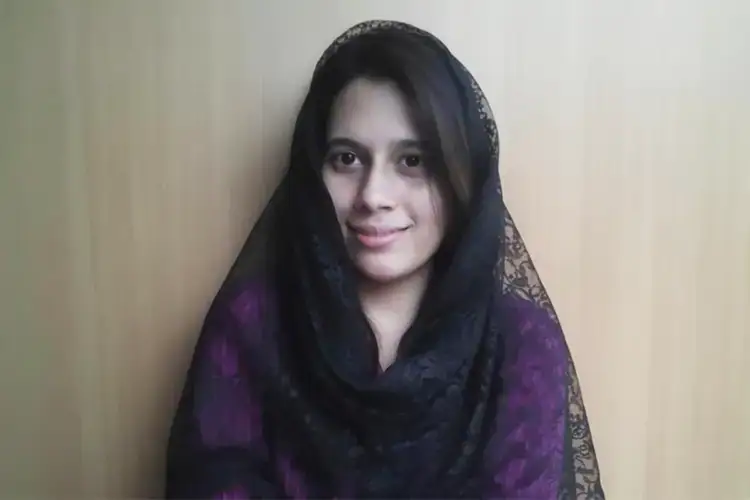
How My M.Ed. Changed the Way I Approach Education
My education at UoPeople became a catalyst for bringing together areas of my professional life that had previously seemed separate.
Through the M.Ed. program, I strengthened my understanding of modern teaching strategies, inclusive pedagogy, project-based learning, and digital assessment. These concepts became particularly relevant to my work in instructional design, where effective learning requires much more than simply presenting information.
Good instructional design asks many of the same questions good teaching does: Who is the learner? What barriers might they face? How can information be made more accessible? And how can technology support meaningful learning rather than simply deliver content?
The program helped me approach these questions with greater academic depth and purpose.
Today, I work as a freelance graphic and instructional designer while continuing my academic journey as a PhD candidate in Education. I am also an independent author and researcher. Rather than seeing these roles as separate careers, I see them as different expressions of the same commitment to learning, communication, and human development.
From UoPeople Student to Student Ambassador
My connection with UoPeople did not end when I graduated.
I now serve as a UoPeople Student Ambassador, which has allowed me to advocate for an educational model I experienced firsthand.
One of the things I valued most as a student was being part of a global academic community. Peer-supported learning exposed me to ideas and experiences beyond my own environment.
That is something I encourage prospective and current students to embrace.
Engage with your peers. Make use of the university’s platforms. Learn from the perspectives of people whose experiences may be completely different from your own.
Education becomes much more powerful when it is treated as a shared experience.
Finding Another Voice Through Writing and Advocacy
Education is only one part of how I explore human growth.
Writing has become another.
My interest in resilience and emotional development eventually led me to write The Architecture of Scars, a book that explores themes of emotional growth and the experiences that shape us.
Writing the book reflects something present throughout my academic and professional life: an interest in how people respond to challenges, grow through difficult experiences, and construct meaning from them.
That interest also extends into my advocacy work. I engage with international human rights and youth initiatives through organizations and networks including Amnesty International and YOUNGO. Climate action, professional ethics, inclusion, and human rights are areas that continue to shape how I think about my responsibilities beyond my individual career.
For me, education and advocacy are closely connected. Access to knowledge can help people understand their circumstances, participate in their communities, and advocate for meaningful change.
Building a Career Without Limiting Myself to One Role
Balancing these interests has required discipline.
Alongside my academic work, I have built experience as a freelance designer through platforms including Upwork and Fiverr, pursued academic publishing, continued my advocacy work, and participated in professional and leadership development opportunities, including the Aspire Leaders Program.
Managing multiple roles at once is not always easy. But I have never believed that a meaningful career has to fit neatly into one professional category.
My journey has instead been about finding connections between disciplines.
Every experience has shaped how I approach my work today. Graphic and instructional design strengthened my ability to communicate ideas, my M.Ed. deepened my understanding of pedagogy, writing helped me explore human experience, and advocacy reinforced the importance of accessibility and inclusion.
Together, these experiences have shaped the professional I am becoming.
My Advice to Future UoPeople Students
My advice is to embrace the flexibility UoPeople offers, but also take responsibility for what you do with it.
Participate in the project-based learning experience. Engage meaningfully with your peers. Use the global community around you as an opportunity to encounter perspectives you may never experience in a traditional classroom.
Most importantly, don’t feel that your education has to lead you toward only one narrowly defined path.
The knowledge you gain can become a foundation for many different possibilities. In my case, an M.Ed. has supported my work in instructional design, research, writing, advocacy, and now doctoral study.
Sometimes education does more than prepare you for your next job. It helps you understand how the different pieces of your life and career can fit together.

Looking Ahead: Research, Education, and Global Impact
My next chapter is focused on my PhD research in Education.
I want to continue exploring education at a deeper level while developing my work in instructional design, academic research, and publishing. At the same time, I plan to remain engaged in global advocacy, particularly in areas related to climate action, human rights, inclusion, and professional ethics.
My M.Ed. gave me a stronger academic foundation for the work I hope to continue through research, instructional design, and global advocacy.
About the Author
Maisha Mozammel D. is a Bangladeshi multidisciplinary professional based in Chattogram, Bangladesh. She earned her Master of Education (M.Ed.) in Advanced Teaching from University of the People in October 2023 and is currently a PhD candidate in Education. She works as a freelance graphic and instructional designer and is also an independent author, researcher, and UoPeople Student Ambassador. Her interests span inclusive education, instructional design, writing, human rights, climate action, and professional ethics. She is the author of The Architecture of Scars and continues to combine her academic and creative work with global advocacy and professional development.