“UoPeople’s Flexible, Tuition-Free Model Made Higher Education Possible for Me,” Says Health Science Student, Mohammed S.
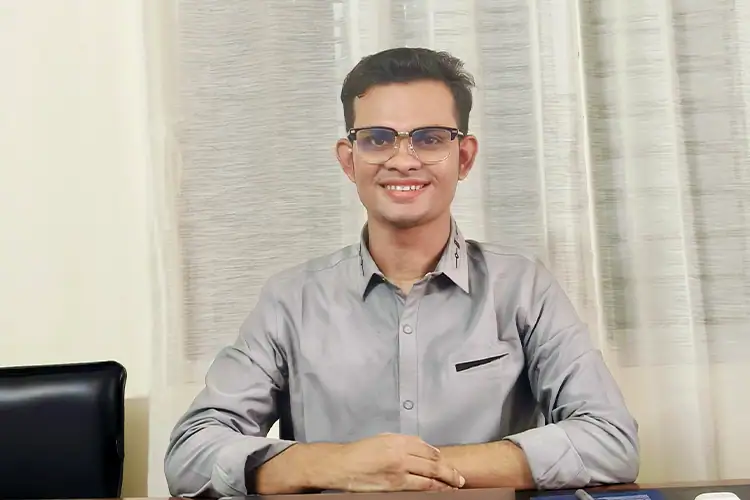
Mohammed S., Health Science, Bangladesh
Mohammed S. was born in Rakhine State, Myanmar. A Rohingya by ethnicity, he grew up stateless under the 1982 Citizenship Law. “Discrimination was not occasional,” he explains. “It was built into the legal and political system. We were denied citizenship, political participation, and recognition as an indigenous community.”
In 2017, during the mass violence against Rohingya civilians, his family fled to Bangladesh. “We lost our home, our property, and our sense of security,” he says. “Displacement changed every part of our lives — from education to safety to our future.” Today, Mohammed lives in Kutupalong Refugee Camp in Cox’s Bazar, where daily life is shaped by uncertainty, limited infrastructure, and restricted opportunity.
Despite these challenges, he refused to give up on education. He completed high school under the Myanmar curriculum at Life Destination High School. “We didn’t have proper laboratory facilities. Electricity was unstable. Internet access was weak,” he recalls. “But I remained focused. I knew education was my only way forward.”
After graduating, Mohammed worked as a mathematics and science teacher with organizations including Plan International Bangladesh, CODEC EPRC Project, and Friendship UNICEF. “Teaching allowed me to support my community while strengthening my own academic foundation,” he says. “It also showed me how powerful education can be in a place where opportunities are limited.”
He discovered University of the People while searching online for affordable, accredited higher education options. As a refugee without citizenship documents or a passport, he knew traditional universities were out of reach for him. “UoPeople’s tuition-free model and flexible online structure made higher education possible for me,” he explains. “The admission process was clear and accessible. I would recommend it to disciplined and self-motivated students from marginalized backgrounds.”
Mohammed enrolled in the Bachelor of Science in Health Science program at UoPeople with the dream of working in healthcare. “I wanted to serve vulnerable populations directly,” he shares. Through courses in biology, public health, epidemiology, and health systems, his perspective expanded. “I began to understand healthcare inequalities, especially in contexts of displacement and statelessness.”
Studying online from a refugee camp requires resilience — but UoPeople’s flexibility makes it possible for Mohammed. “Electricity is unstable. Internet access is inconsistent. Study space is limited,” he says. “I organize my schedule around available resources.”
Yet he makes the most of UoPeople’s global learning environment. “Even from the camp, I can engage with peers from different countries and professional backgrounds. The peer assessment system has strengthened my critical thinking, academic writing, and analytical skills.”
Alongside his Health Science degree, Mohammed completed a two-year Diploma in Academic Research Studies at the Rohingya Academic Research Institute and pursued additional academic training in law, human rights, politics, and social sciences. His research focuses on genocide, migration, Rohingya identity, and international law. “The persecution of the Rohingya was not only military,” he explains. “It was also legal and institutional. The 1982 Citizenship Law normalized statelessness and enabled exclusion.”
This realization reshaped his ambitions. “Justice requires not only humanitarian assistance but structural legal reform,” he says. After completing his Health Science degree at UoPeople, Mohammed plans to pursue a Master of Laws (LLM) in International Law. “My long-term goal is to contribute to constitutional and citizenship law reform in Myanmar,” he shares. “I want to work toward recognition of the Rohingya as an indigenous ethnic community, restoration of citizenship rights, and meaningful political representation.”
For Mohammed, the transition from an aspiring healthcare professional to an aspiring legal scholar is deeply connected. “Health inequity, forced displacement, and statelessness are linked to governance and legal status,” he says. “Law has become, for me, an instrument of systemic transformation.”
In addition to his studies, Mohammed serves voluntarily as Director of Research at the Rohingya Academic Research Institute. He mentors young refugee students, writes analytical articles and research papers, and contributes to policy discussions on refugee rights and social justice. “Balancing research, advocacy, and academic study in a refugee camp is challenging,” he admits. “But education is not only personal advancement for me. It is a responsibility to my family and my community.”
Reflecting on his journey, Mohammed says, “University of the People has played a transformative role in my life. It has provided academic opportunity, institutional credibility, and a pathway toward postgraduate study. Without UoPeople, continuing my education at an advanced level would be nearly impossible.”
As a university committed to empowering students like Mohammed, we are proud of the resilience and purpose that have shaped his journey. His determination reflects the transformative power of education — not only to change individual lives, but to inspire meaningful, systemic change within entire communities. We wish him continued success as he moves forward in pursuit of his goals.