
Sustainability Through Software: Tech Leaders Tackling Climate Challenge

Updated: January 29, 2026

The environmental impact of software is no longer invisible. For technology leaders, the question is clear: how can the systems they build today contribute to a more sustainable tomorrow?
As the climate crisis accelerates, industry professionals must confront a growing paradox: the very software that drives innovation and efficiency also carries a hidden environmental cost. Behind every algorithm and online service lies a vast infrastructure consuming electricity, generating emissions, and placing real strain on global resources.
The rise of large-scale artificial intelligence (AI) models, cloud computing, and globally distributed applications demands staggering amounts of electricity. This energy usage not only contributes to increased carbon dioxide emissions but also places pressure on already burdened electrical grids. The 2024 United States Data Center Energy Usage Report found that data centers consumed 4% of U.S. electricity in 2023 and warned that by 2028, the number could rise significantly—potentially doubling or more under high-growth scenarios.
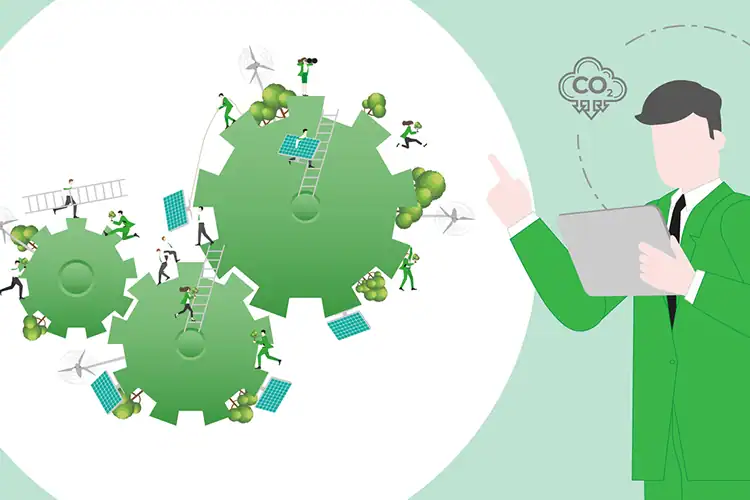
Compounding this is the significant water usage required to cool high-performance computing systems, stretching municipal supplies and disrupting local ecosystems. The rising demand for powerful hardware also introduces further environmental impact through the extraction, manufacture, and global transport of electronic components.
As digital technologies and AI expand into every aspect of modern life, the environmental toll of our software decisions can no longer be ignored.
The Emergence of Green Software Engineering
In response, a new movement is taking shape: green software engineering. This approach reimagines how code is developed, with sustainability as a central goal. It reflects a growing awareness that software is not environmentally neutral and that thoughtful design can significantly reduce its impact.
Rather than treating efficiency as a secondary concern, green software engineering aims to build applications that require less energy to run and make smarter use of hardware. This involves writing energy-efficient code, selecting low-power architectures, and applying carbon-aware programming techniques that adjust workloads based on the availability of renewable energy.
Organizations such as the Green Software Foundation are leading efforts to define best practices, building open-source tools that help developers measure and improve the sustainability of their work. The foundation’s principles highlight the shared responsibility among technologists, companies, and educational institutions to embed sustainability into the software lifecycle.
Some of the world’s largest technology companies have begun integrating sustainability into their software and operations in meaningful ways.
Microsoft has pledged to become carbon negative by 2030, removing more carbon from the atmosphere than it emits. Central to this initiative is a push for more efficient code, intelligent cloud infrastructure, and investments in carbon removal technologies. Meanwhile, Google has used AI to optimize cooling systems, improving efficiency significantly in early tests, and continues to refine real-time optimization. The company has also committed to operating on carbon-free energy 24/7 across all data centers and campuses by 2030.
Beyond these tech giants, a growing number of startups and open-source projects are building sustainability-focused tools, from platforms that track software carbon footprints to applications that support environmental monitoring and conservation.
Software As a Tool for Sustainability
Efforts to make software more sustainable are paralleled by the growing use of software to advance sustainability itself. AI and machine learning are now widely used to monitor environmental conditions, predict deforestation, track air and water quality, and improve energy efficiency across sectors. These technologies support faster, more precise responses to environmental risks, enabling both governments and businesses to take proactive action.
One particularly promising area is the use of digital twins — virtual models of physical systems that allow engineers and city planners to simulate real-world conditions. These models are increasingly used to optimize energy consumption in buildings, manage urban infrastructure, and reduce emissions.
In smart agriculture, software-driven systems help farmers monitor soil health, forecast weather patterns, and optimize irrigation schedules, leading to more efficient resource use. Another technique, high-resolution climate modeling, delivers more accurate forecasts and simulations that inform everything from disaster preparedness to long-term policy planning.
These examples underscore software’s potential not only to reduce its own impact but also to serve as a catalyst for environmental progress across industries. However, realizing that potential at scale comes with challenges.
One of the most significant barriers is the absence of standardized sustainability metrics for software. Without consistent methods to assess energy consumption, carbon intensity, or lifecycle emissions, developers and organizations struggle to evaluate impact or track improvements meaningfully. Innovation itself can also pose risks: rapid development cycles and increasingly complex applications often result in higher energy usage, creating tension between performance and environmental responsibility.
Addressing these challenges requires a systems-level approach. Software alone cannot decarbonize the digital economy. It must work in concert with sustainable hardware design, supportive policy frameworks, and collaboration across sectors. Shared responsibility among engineers, executives, educators, and policymakers is essential to building a greener digital future.

The Role of Education: Preparing the Next Generation
Embedding sustainability into computer science and engineering education is a crucial step toward long-term impact. Students must learn how to build scalable software and how to both measure and reduce its environmental footprint.
At UoPeople, we are committed to preparing ethically grounded, environmentally conscious professionals. Our computer science curriculum incorporates the fundamentals of energy-aware design and encourages students to explore the intersection of digital innovation and environmental responsibility.
We emphasize both the technical and ethical dimensions of software development, ensuring that our graduates understand the long-term consequences of the systems they build. Through courses, projects, and real-world case studies, our students learn to use software as a force for good.
We cannot afford to stand by as technology accelerates unchecked. Without a shift in how we build and deploy digital systems, we risk deepening the climate crisis. The environmental cost of inaction will be measured not only in carbon but in disrupted ecosystems and widening global inequities.
By embracing green software engineering, leveraging AI for climate solutions, and equipping future developers with the right tools and values, we can ensure that the digital revolution contributes not just to economic growth, but to planetary resilience. The future of our planet may well depend on how we write code.